
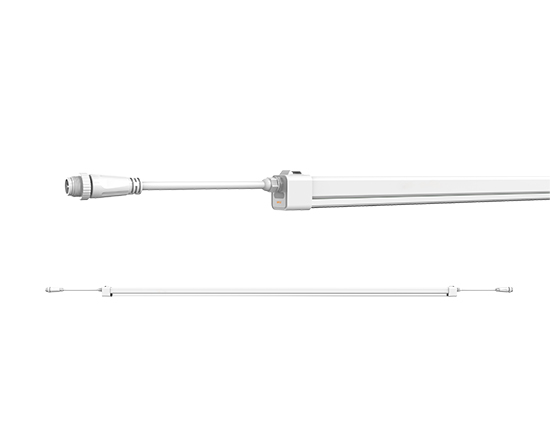


With the increasing popularity of vertical farming and indoor cultivation, indoor plant growth light tubes have become an indispensable core component of modern farms. Our 4-foot T8 plant growth light is designed for professional growers, perfectly meeting the lighting needs of vegetables, edible flowers, and fruits.
Daisy Chain
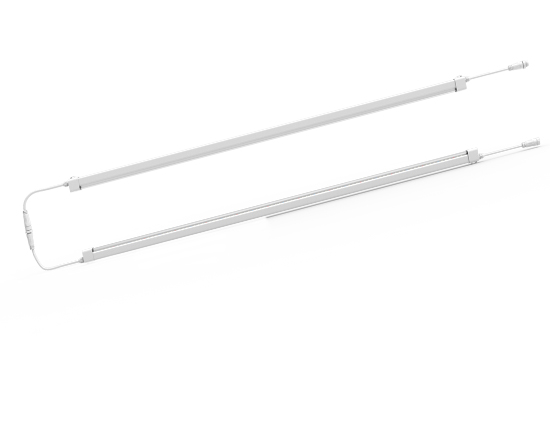
This T8 plant growth light bar features an advanced daisy-chain design, allowing users to connect multiple light bars together, significantly reducing wiring complexity.
Vertical farms often require dozens or even hundreds of light bars. Traditional wiring methods necessitate individual connections for each light bar, which is not only cumbersome to install but also poses potential safety risks.
Our 36W LED lights support the connection of 16 to 36 light bars in series (depending on voltage). A single power source can provide illumination for an entire growing layer, making it highly suitable for large-scale multi-tier cultivation systems.
Full Spectrum

Blue light promotes the robust growth of plant stems and leaves, while red light accelerates flowering and fruiting. This specially formulated
spectrum also enhances the taste of plants, making leafy vegetables more tender, herbs more flavorful, and edible flowers more vibrant.
Compared with traditional agriculture, vertical farms using professional vertical LED grow lights can make crops have a more uniform appearance,
increasing the product value by more than 30%.
Specifications

Frequently Asked Questions (FAQ)
Q: What is the optimal distance between the light bars and plants?
A: The recommended distances are as follows:
30-40 cm during the seedling growth stage
20-30 cm during the vigorous growth stage
15-25 cm during the flowering and fruiting stage
Adjustments can be made based on plant response. Slight upward curling of leaves indicates optimal light intensity.
Q: Can different types of crops be grown simultaneously?
A: Yes, but it is advisable to select varieties with similar light requirements (e.g., lettuce and spinach). If crops have significantly different light needs (e.g., lettuce and tomatoes), it is recommended to set up separately controlled growing zones.
Q: How long should the lights be turned on daily?
A:
Leafy vegetables: 14-16 hours per day
Flowering and fruiting plants: 12-14 hours per day
Ensure plants receive at least 6 hours of darkness daily to prevent photoperiod stress.